Serverless, so there's nothing to patch
A security team shouldn't have to maintain servers for its own tooling. The API runs on Lambda behind API Gateway, data is in DynamoDB, and the frontend is served from S3 through CloudFront.
Case study · Security operations
A security operations team was triaging thousands of scanner findings in a spreadsheet and creating every remediation ticket in Jira by hand. I built the web app that replaced both, alone, from the parsers to the AWS infrastructure.
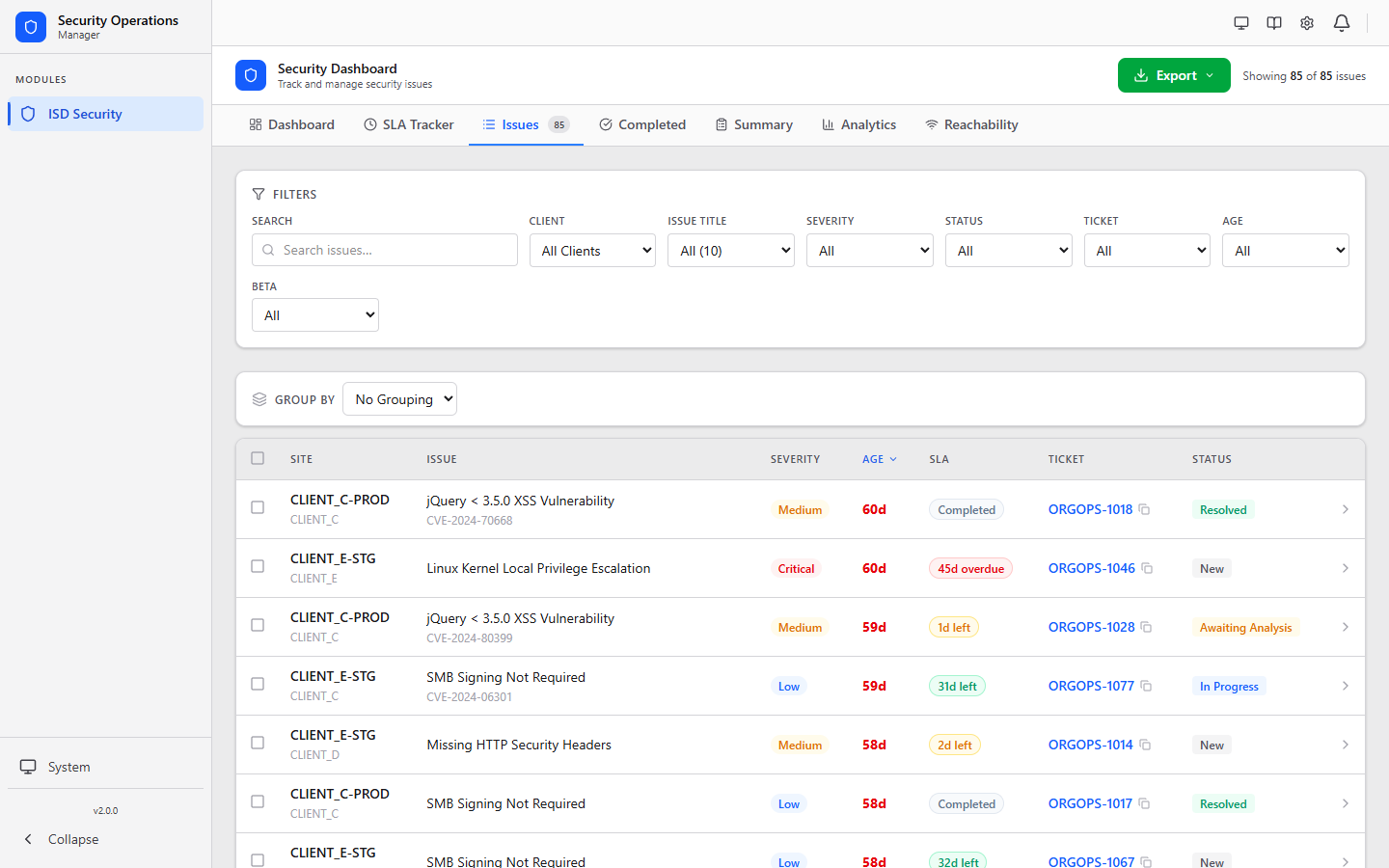
Findings arrived from different tools: Nessus vulnerability scans, CIS benchmark checks (through Prowler) and ISD reports. Each tool exports a different format. They were tracked in a spreadsheet with thousands of rows, so it was hard to see which findings were past their SLA, which ones were duplicates across sites, and which ones already had a ticket. Every ticket was then typed into Jira by hand.
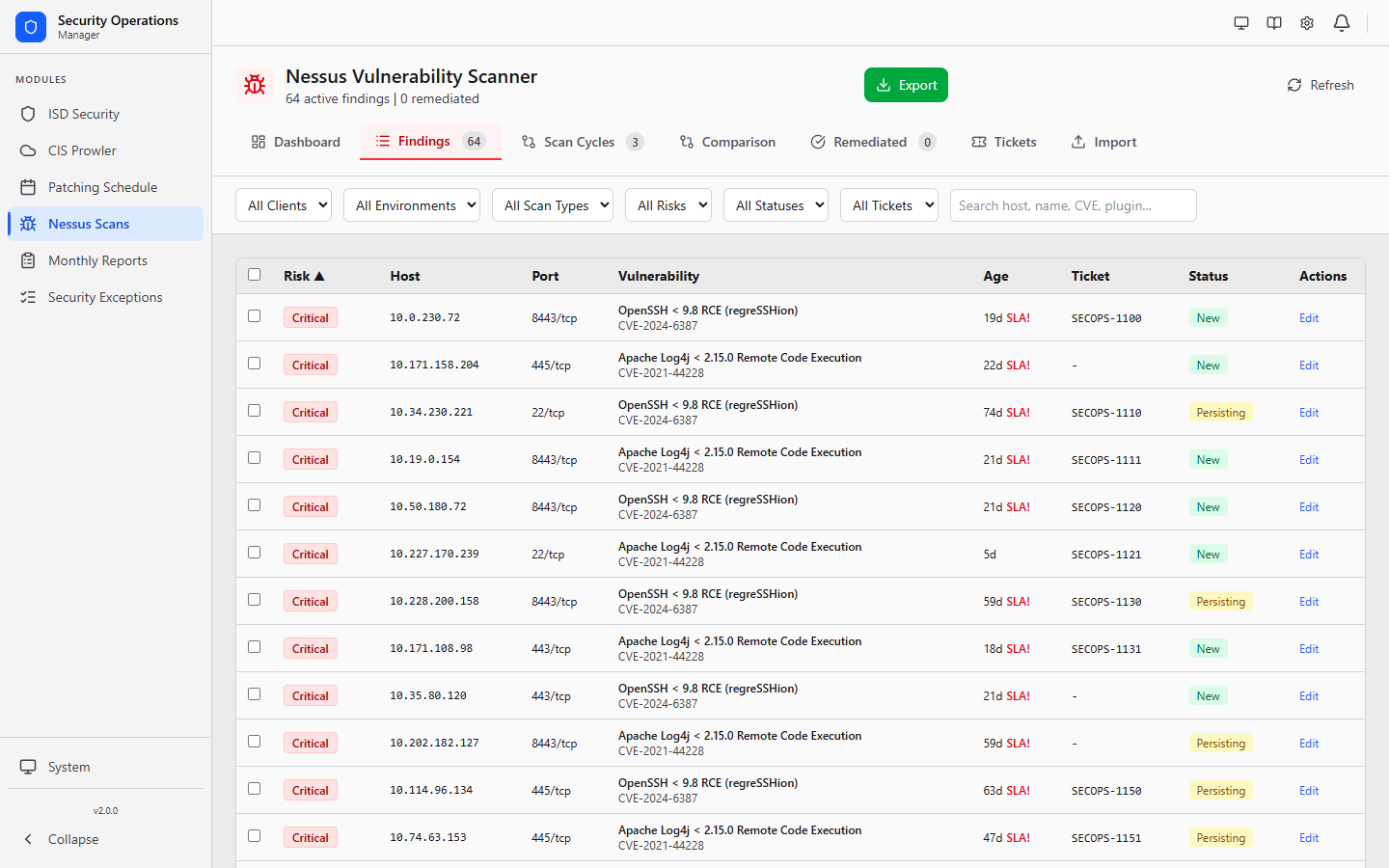
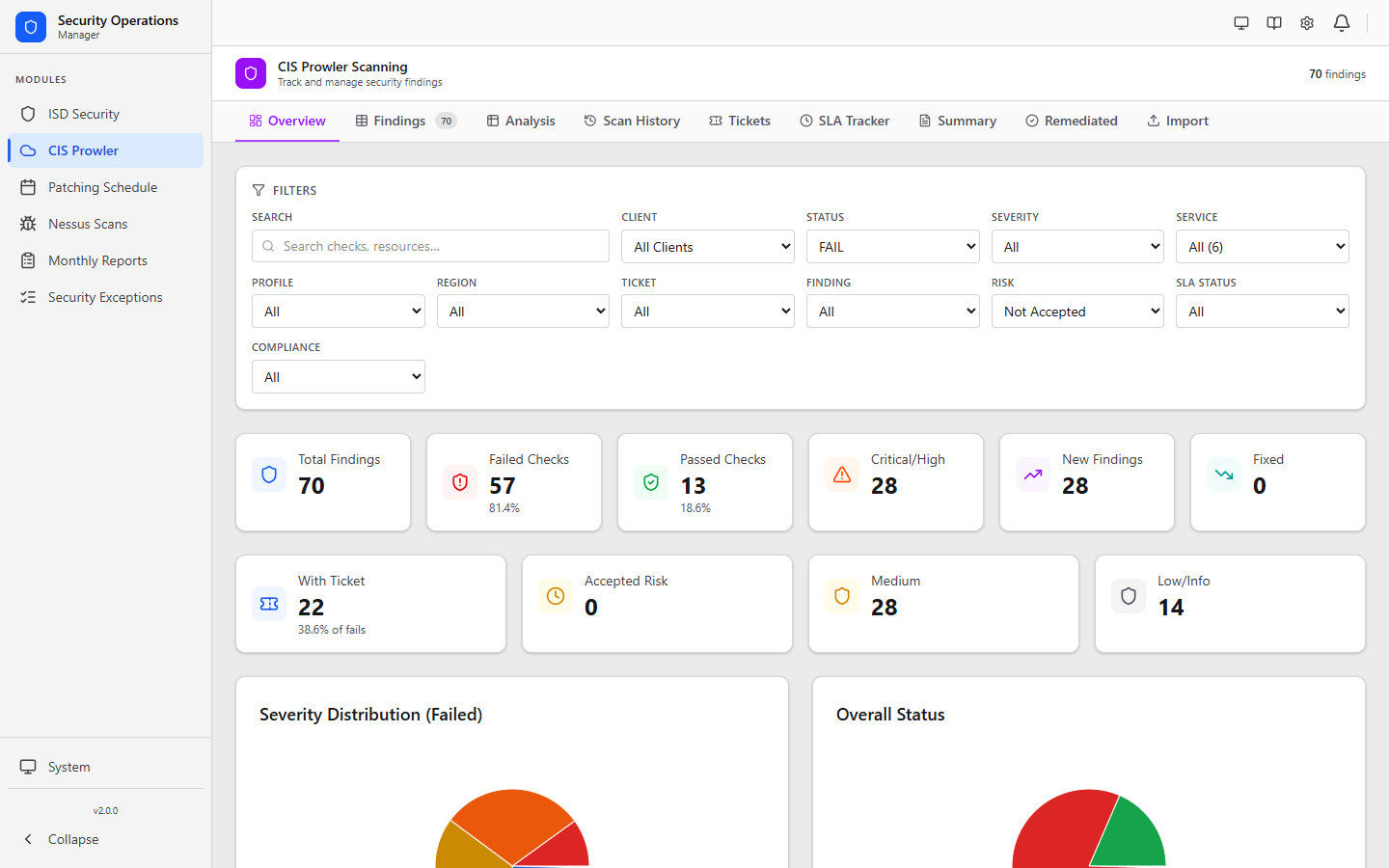
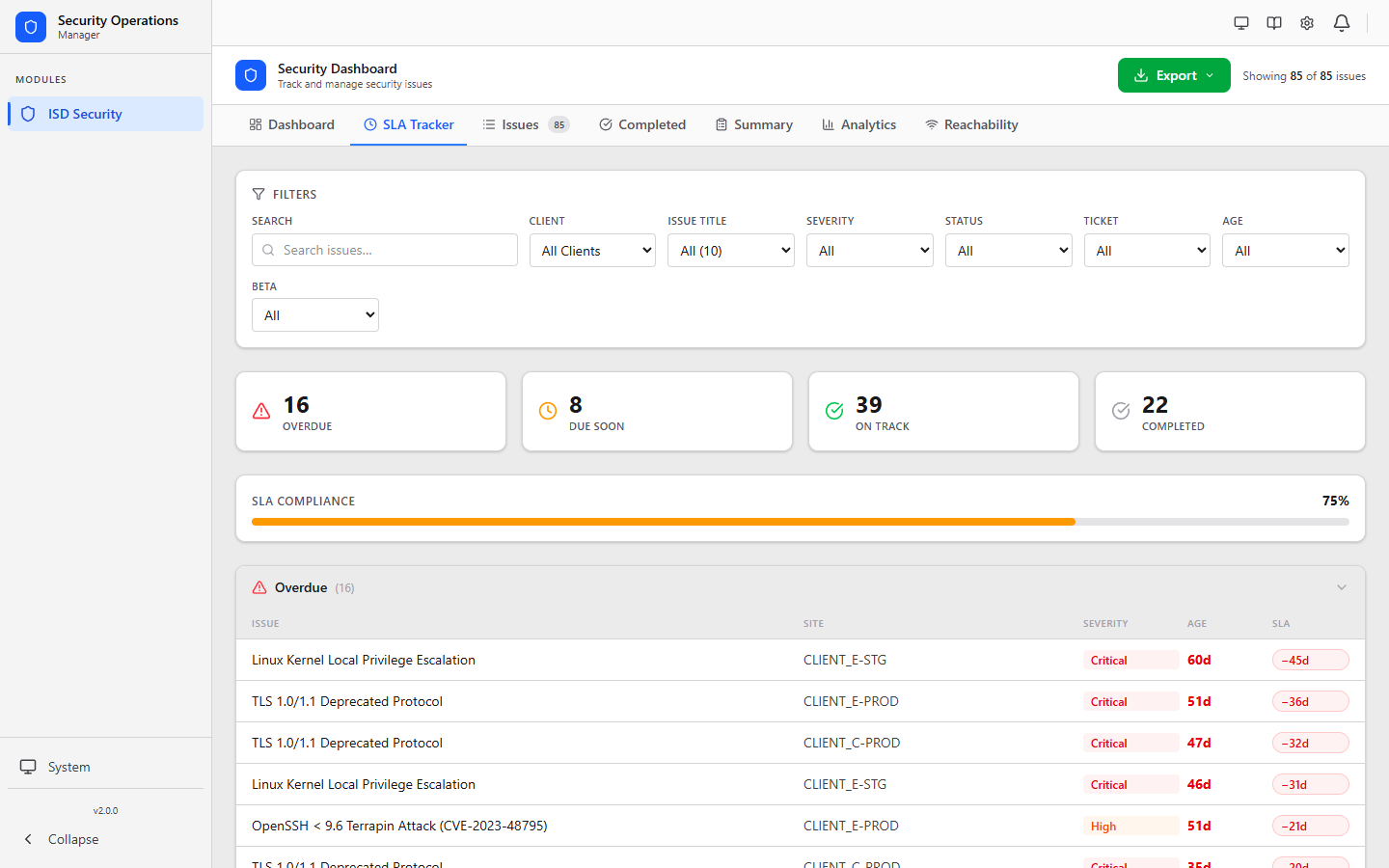
Each source has its own module with a dashboard, a findings list, SLA flags and Jira ticket generation: ISD security issues, Nessus vulnerability scans, and CIS benchmark checks from Prowler. Patching schedules, monthly reports and security exceptions sit next to them.
A security team shouldn't have to maintain servers for its own tooling. The API runs on Lambda behind API Gateway, data is in DynamoDB, and the frontend is served from S3 through CloudFront.
Every API handler checks its input against shared Zod schemas before touching the database. Logins go through Cognito with role groups, and changes are written to an audit log.
The whole stack is AWS CDK, with separate staging and production. Production deploys stop for approval when a change widens permissions.
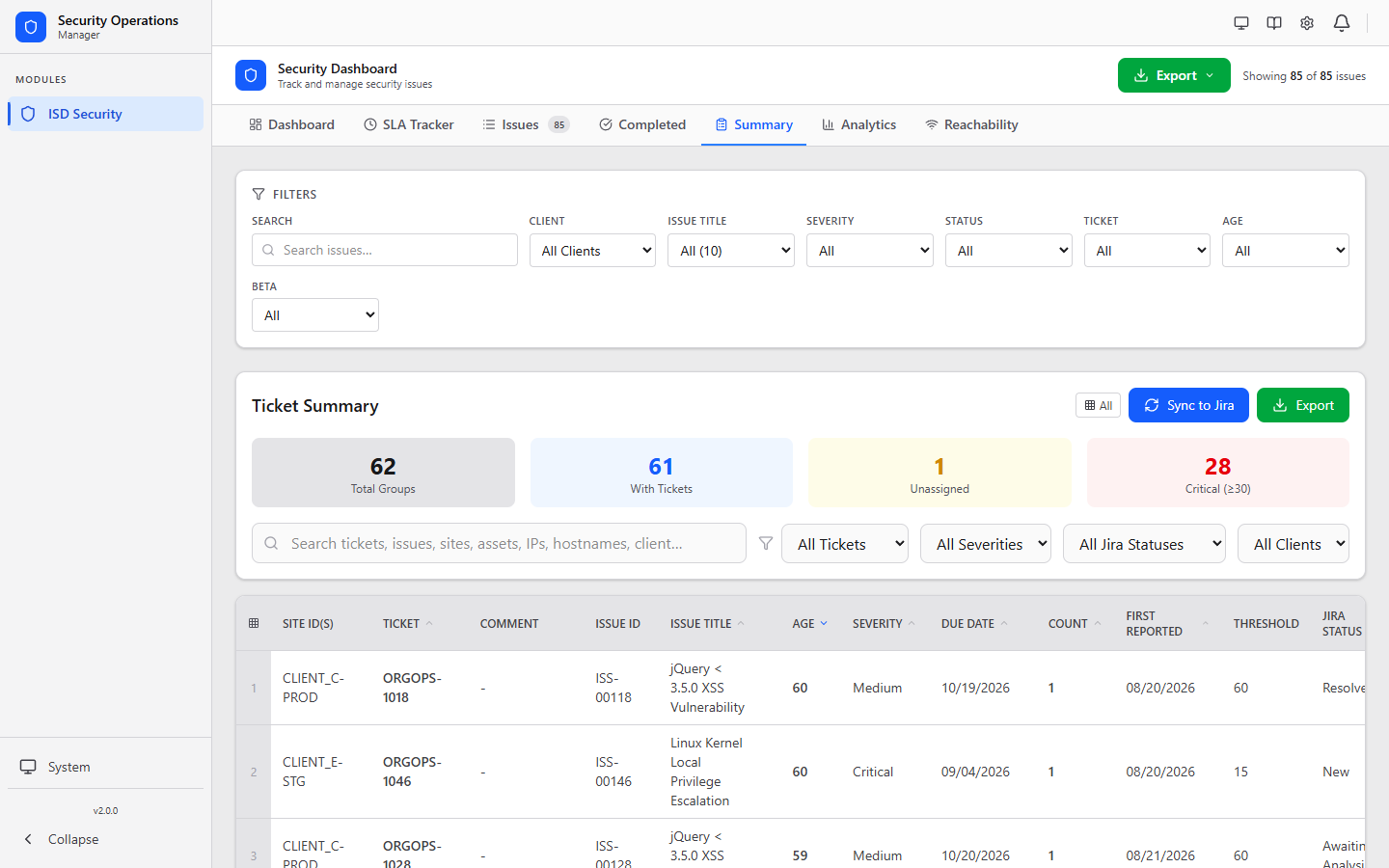
The spreadsheet and the manual ticket work are gone. Triage, SLA tracking and ticket creation now happen in one place, which saves the team a lot of time on every scan cycle.
This page and its screenshots come from a sanitized copy of the project. Company and client names, domains, emails and AWS account details are replaced with placeholders.
I build internal tools and serverless backends on AWS, and I'm open to full-time roles.
Email me Next: Medical records →